

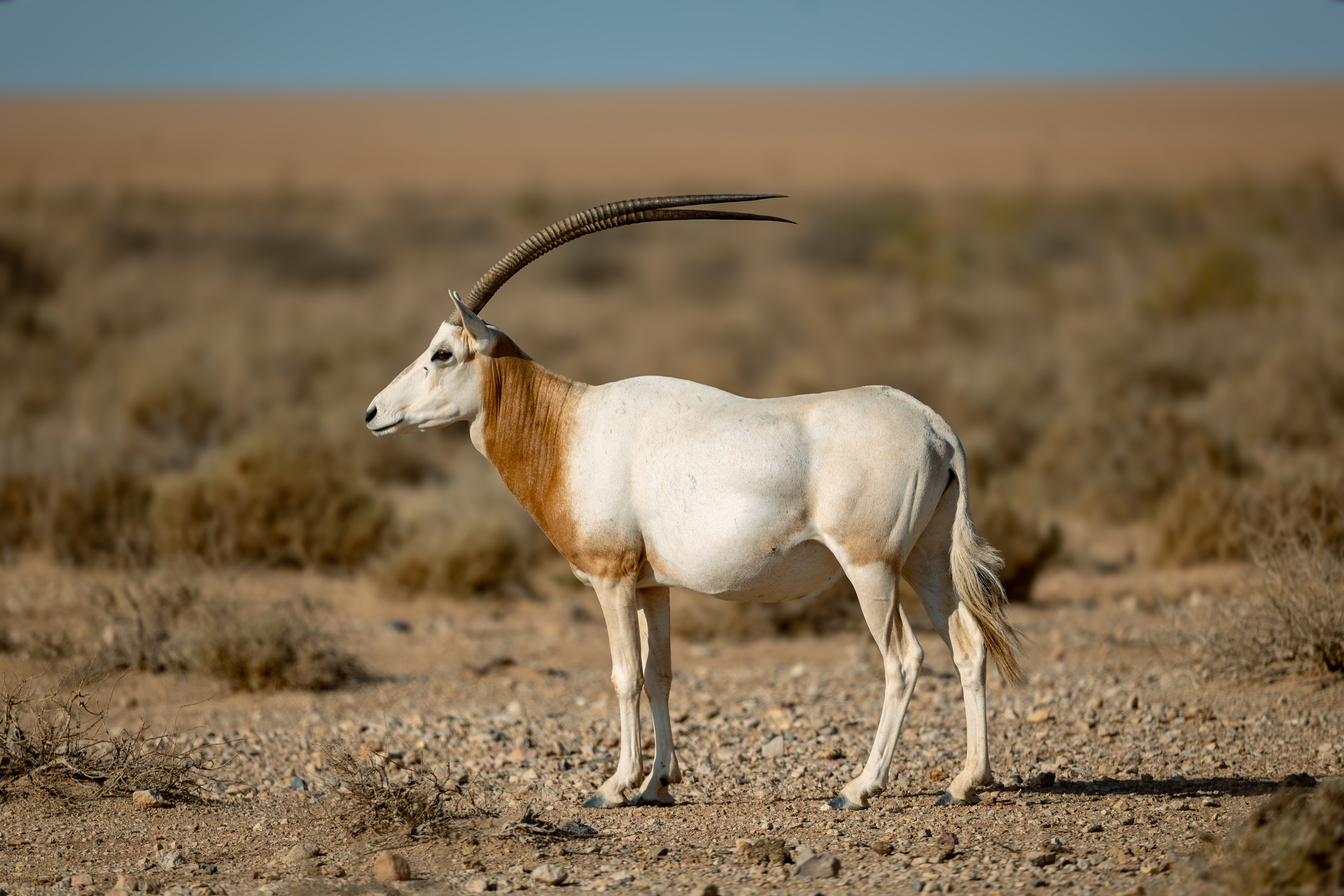



Wiki Loves Earth is not only about taking photographs of natural heritage and entering a competition. For the Wikimedia Tunisia team, the competition is also an opportunity to encourage photographers to become active contributors to Wikimedia Commons and to continue improving their photographs after the upload.
The 2026 edition in Tunisia provides an interesting example of this approach.
A strong result on Wikimedia Commons
The 2026 Wiki Loves Earth collection from Tunisia currently includes more than 2,200 photographs. Among them, 248 have been assessed as Quality Images (QI), while 34 are currently listed as Featured Pictures (FP) on Wikimedia Commons. These numbers are based on the current Commons categories and may continue to change as further assessments take place.
The number of Featured Pictures is particularly notable when compared with the other national categories currently listed under Wiki Loves Earth 2026. Tunisia’s category contains more Featured Pictures than the other participating countries in the current list, including Madagascar (25), Germany (16), Italy (13), Portugal (8), Spain (7), and Kuwait and Malta (5 each).
This result is not only a statistic for the competition organizers. It illustrates the potential of using a photo competition as a gateway to longer-term Wikimedia participation.

From uploading photographs to contributing to Commons
One of the challenges of photography competitions on Wikimedia projects is that participation can sometimes end when the competition upload period closes.
The approach adopted in Tunisia has been to encourage participants to take a further step: to submit their strongest photographs for community assessment as Quality Images and Featured Pictures.
Quality Images and Featured Pictures are not simply additional competition prizes. They are Wikimedia Commons community assessments that give photographers an opportunity to receive feedback and to have their work evaluated according to Commons image standards.
For the organizers, encouraging this process has another important benefit: participants who discover QI and FP processes are introduced more deeply to Wikimedia Commons.
They learn how to:
- improve image quality and processing;
- add appropriate descriptions and categories;
- provide useful metadata;
- understand Commons assessment processes;
- interact with other photographers and reviewers;
- nominate and review photographs;
- and continue contributing after the competition itself.
In this way, a competition upload can become the beginning of a longer Wikimedia journey.
A strategy that started before Wiki Loves Earth 2026
The Tunisian team did not introduce the idea of rewarding quality assessments for the first time in 2026.
During Wiki Loves Monuments Tunisia 2025, the organizers encouraged participants to continue their work on Commons after the competition. The Tunisian edition produced 116 Quality Images and 10 Featured Pictures in the corresponding Commons categories.

The same philosophy was also used in Wiki Loves Earth 2024, when Tunisian participants achieved 567 Quality Images and 50 Featured Pictures, according to the organizers’ records.
These experiences helped shape the approach used for Wiki Loves Earth 2026: participation matters, but improving the quality and long-term value of the uploaded material matters as well.


Introducing an incentive for QI and FP
For Wiki Loves Earth Tunisia, the organizers decided to connect the post-upload quality process with the competition evaluation.
During the jury process, photographs that subsequently receive a Quality Image or Featured Picture assessment can receive a bonus:
+5 points for a Quality Image
+10 points for a Featured Picture
The purpose of this mechanism is not to replace the jury’s assessment of the competition photographs. Rather, it is designed to encourage participants to invest additional effort in improving and documenting their work and to become more active Wikimedia Commons contributors.
The strategy also includes special recognition for participants who achieve a high number of QI and FP assessments.
This creates an additional pathway for participants:
Upload → Improve → Nominate → Receive community feedback → Contribute more
Instead of considering the upload as the final stage of participation, the organizers try to turn it into the first stage of continued engagement with Wikimedia Commons.
Learning from experienced Commons photographers

Another interesting aspect of the strategy is the importance of experienced photographers within the Wikimedia Commons community.
One example is Diego Delso, better known on Commons as Poco a poco. His Commons profile documents an extensive body of work, including thousands of Quality Images and hundreds of Featured Pictures, as well as substantial participation in Wiki Loves Earth and Wiki Loves Monuments.
His contribution demonstrates how a photographer can move far beyond participating in individual contests and develop a long-term practice of documenting the world for Wikimedia projects.
For newer Tunisian participants, this provides an important model: the objective does not have to be simply winning a photography competition. It can also be developing into a regular Wikimedia Commons contributor.
What comes next for Tunisia?
The 2026 results suggest that the next challenge is not simply to increase the number of uploaded photographs, but to increase the number of photographers who actively participate in the quality-assessment ecosystem of Wikimedia Commons.
For future editions, Wikimedia Tunisia plans to further encourage:
- QI and FP nomination workshops;
- peer-to-peer image review sessions;
- practical training on image processing and metadata;
- photography outings focused on protected areas and biodiversity;
- mentoring for photographers interested in Commons assessments;
- and continued recognition of contributors who actively develop their Commons portfolios.
The objective is to create a cycle in which competition participants gradually become regular Wikimedia contributors.
Beyond numbers
The number of QI and FP photographs is useful for measuring the impact of the project, but the deeper objective is community development.
A participant who uploads ten photographs for Wiki Loves Earth is valuable to the project. A participant who uploads photographs, learns how Commons works, receives feedback, improves their images, nominates them for QI or FP, participates in discussions, and continues documenting Tunisia throughout the year becomes an even more active part of the Wikimedia movement.
This is why the Tunisian experience is increasingly focused on the journey after the upload.
The photographs document Tunisia’s natural heritage. The assessments help improve their quality. And the community process helps transform competition participants into long-term contributors.
Building a culture of quality
Wiki Loves Earth provides a unique opportunity to connect photography, environmental heritage and Wikimedia participation.
Tunisia’s 2026 results — currently 248 Quality Images and 34 Featured Pictures listed on Wikimedia Commons — show what can happen when competition participation is combined with a deliberate effort to encourage quality assessments and continued contribution.
The ambition for the next editions is therefore not simply to upload more photographs.
It is to build a stronger culture of quality, knowledge sharing and continuous contribution on Wikimedia Commons.
For Wiki Loves Earth Tunisia, the competition does not end when the upload period closes.
The competition can be the beginning of the contribution.

Can you help us translate this article?
In order for this article to reach as many people as possible we would like your help. Can you translate this article to get the message out?
Start translation